

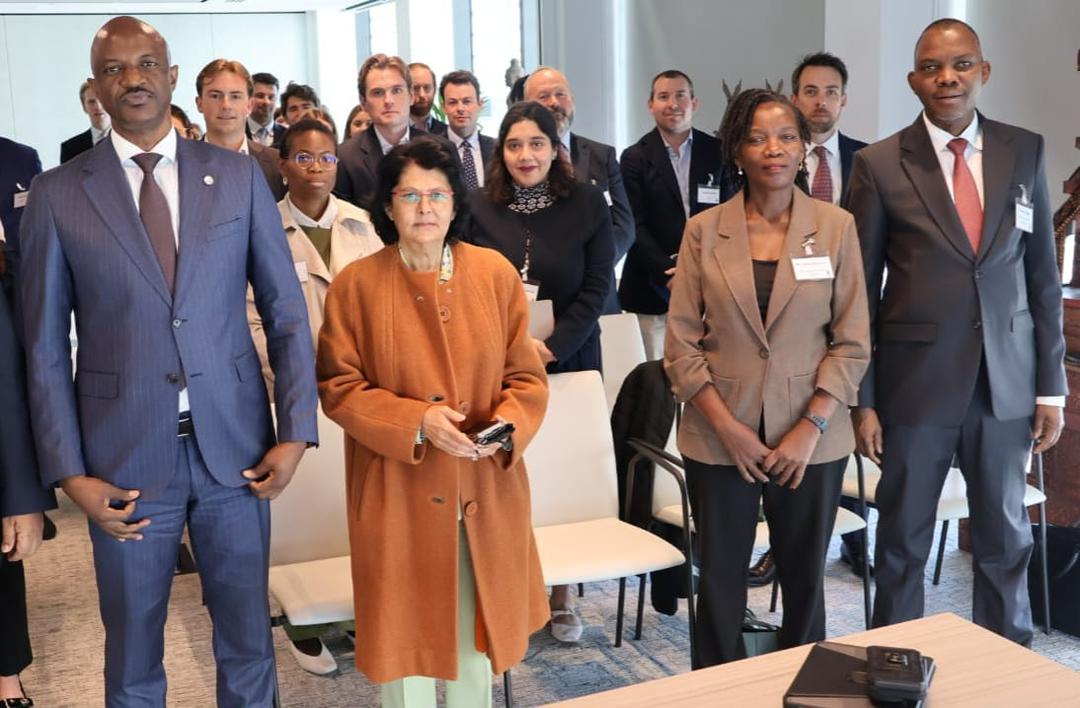
The Permanent Secretary and Secretary to the Treasury, Ramathan Ggoobi, has assured prospective development partners in the United Kingdom that Uganda’s economy remains stable, resilient, and positioned for long-term growth.
Ggoobi made the remarks during an investor engagement at Standard Chartered Bank headquarters in London, where he met insurers, banks, and investment groups to present Uganda’s economic outlook and strategic ambition to grow into a $500 billion economy by 2040.
He said Uganda’s macroeconomic stability is anchored on prudent monetary policy, supported by strong foreign exchange reserves that provide a buffer against global shocks.
“Favourable terms of trade, alongside strong portfolio flows and foreign direct investment, have helped boost Uganda's foreign exchange reserves to an all-time high,” Ggoobi said.
The PSST, accompanied by Director of Economic Affairs Moses Kaggwa, Director of Debt and Cash Policy Maris Wanyera, and Bank of Uganda Executive Director Adam Mugume, noted that real GDP growth is projected to exceed 7% in 2026, driven largely by developments in the oil sector.
He added that oil production is expected to begin in the fourth quarter of 2026 and peak at about 230,000 barrels per day by 2028, potentially lifting economic growth to around 9%.
Ggoobi highlighted investment opportunities across multiple sectors, including minerals, where Uganda has confirmed commercially viable deposits of more than 30 different resources.
He also pointed to major infrastructure projects such as the East African Crude Oil Pipeline, the Malaba–Kampala Standard Gauge Railway, the Hoima Oil Refinery, and the expansion of industrial parks.
On public debt, Ggoobi said Uganda’s debt stock had reached $32.2 billion as of June 2025 but stressed that it remains sustainable under a prudent medium-term debt management strategy aimed at reducing interest burdens and maintaining fiscal discipline.
He outlined key measures including domestic revenue mobilisation and increased reliance on concessional financing to ease pressure on the national budget.
Sanjay Rughani, Chief Executive Officer of Standard Chartered Bank Uganda, said the engagement offered a valuable opportunity to strengthen dialogue with UK investors, adding that the bank remains committed to supporting Uganda’s long-term growth agenda.
Ugandan officials also held discussions with the bank’s Chief Economist for Africa and the Middle East, Razia Khan, focusing on the implications of the Middle East crisis and Uganda’s preparedness to manage external shocks.
Ggoobi said Uganda’s response is centred on investing in growth and resilience rather than short-term measures such as tax cuts or subsidies.
He added that the evolving global landscape presents opportunities for Uganda to position itself in renewable energy, food production, and broader decarbonisation efforts.
The delegation also engaged Standard Chartered officials on export credit financing, private credit opportunities, and investment prospects in metals and the mining sector.
